
Denton County Residents Directory Starting Points
Every lookup starts somewhere small. A street number, a surname, or an old deed reference can each unlock different public records across Denton County. The Denton County residents directory helps you sort those starting points into the right indexes. An address usually points to the tax and parcel rolls first. An older name may sit in a library directory or newspaper archive instead. Results show documented relationships, like an owner or a party to a record. They do not confirm a current household. Someone hoping to find who lives on a street in Denton County should treat each result as a clue. Keep the source, date, and record type together while comparing answers.
- Write the address as it appears on the deed, tax notice, or directory, including direction and street type when known.
- Check the tax or appraisal record for the current situs, parcel identity, and separately labeled mailing information.
- Use the parcel’s legal description, subdivision, or owner name in the County Clerk’s recorded-property index.
- Compare dated public records with a library directory, newspaper, or vital index when the question concerns an earlier household.
- Ask the proper custodian for an existing record when a public image, historical volume, or nonconfidential copy is not online.
Note: A matching name stays a lead until address, date, and record role line up across reliable sources.
Denton County Resident Records Offices
Several custodians split the resident-related records of Denton County. The County Clerk keeps the official real-property instruments, along with separate vital, civil, misdemeanor, probate, and juvenile duties. DCAD supplies the parcel and appraisal layer. Elections staff run county election administration, while the Secretary of State controls the statewide voter routes and public-file rules. Keeping those roles straight matters when you compare a name or address across systems. The Denton street directory develops the full address-by-address path.
Denton County Clerk
1450 E McKinney St, Suite 1103
Denton, TX 76209
940-349-2012
Denton Central Appraisal District
Property identity and appraisal data
Use the current parcel record
940-349-3800
Denton County Elections
County election and precinct help
Official local-election resource
940-349-3200
A clerk index names a grantor or grantee, yet it never certifies who actually lived at the property. An appraisal record names a tax owner, but the mailing address may sit somewhere else entirely. These distinctions are the useful heart of any Denton residents directory search.
Denton County TaxWeb Record Paths
The Tax Assessor-Collector's TaxWeb search makes a practical first stop. It works well once you hold an address or an owner name. Its help text keeps owner name, owner address, and property location distinct. Owner address means a mailing address. Property location means the actual situs, the physical property address. The form adds account type, active or inactive choices, and paid or unpaid status. A mailing mismatch is often ordinary. Record both fields rather than reading either one as proof of occupancy.
| TaxWeb control | How it narrows a Denton record | Careful reading |
|---|---|---|
| Owner name | Search with the displayed last-first style | Identifies tax-account context, not a household roster |
| Owner address | Checks the mailing address attached to an account | May be different from the property situs |
| Property location | Uses a number and street name without street type or direction | Targets the actual property address |
| Account and status controls | Limits by account type, activity, or payment status | Status does not establish residency |
The Denton County TaxWeb search displays the owner-address and property-location controls used in that first check.
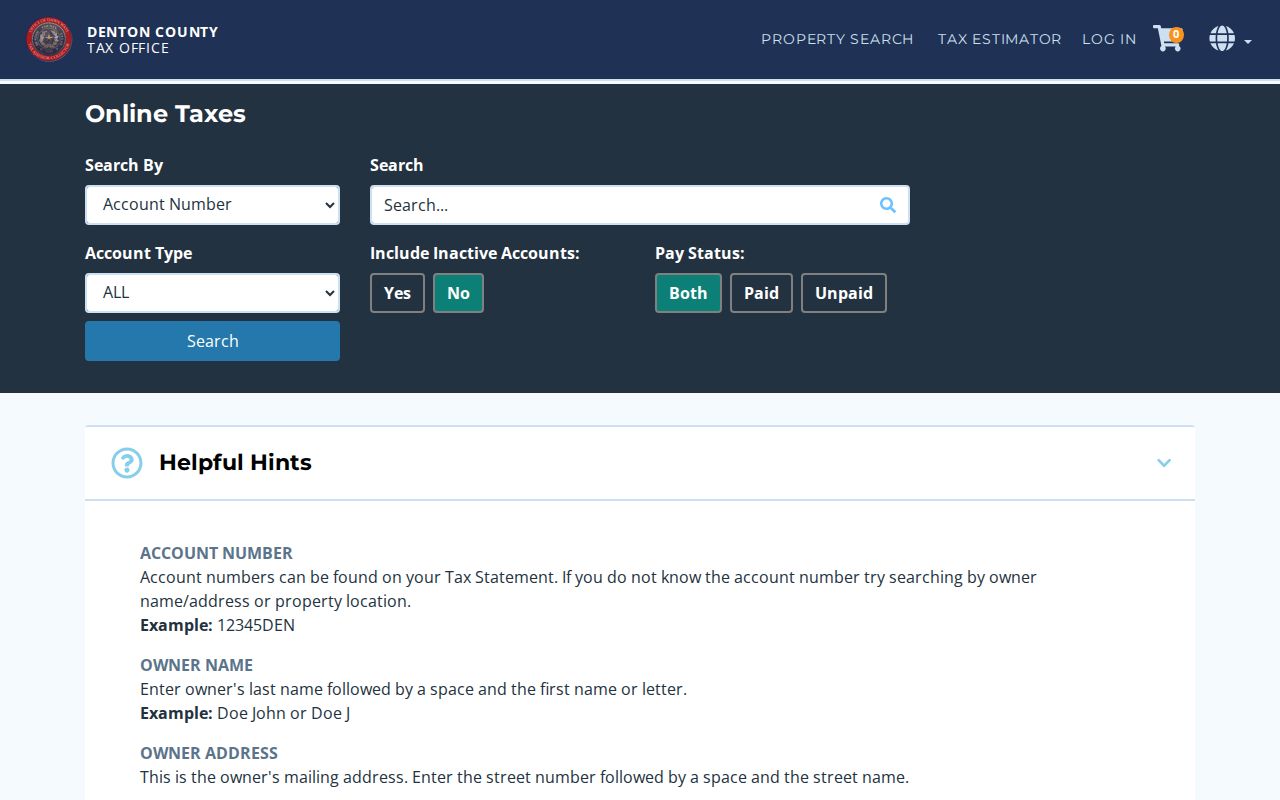
Before moving on to DCAD or the deed index, note whether each result came from an owner field, a mailing field, or a property-location field. That label travels with the result.
Note: Copy TaxWeb labels exactly as displayed so an owner mailing address is never mistaken for the property's situs.
Denton County Deed Index Records
The County Clerk PublicSearch portal is the official trail for recorded real-property work. It serves Denton County. Quick Search accepts any term tied to a grantor or grantee, subdivision, document type, or document number. Recorded-date from and to fields, date shortcuts, and a choice between index-only and wider index-and-OCR searching round out the options. In index search, two or more words are treated separately. OCR can hunt for a phrase. But any apparent hit still deserves review against the record image itself.
| PublicSearch field | Useful Denton query | What to confirm next |
|---|---|---|
| Quick Search term | Party name, subdivision, document type, or document number | Indexed role and matching instrument |
| Recorded Date | A date range or available shortcut | Whether the chronology fits the question |
| Index Only | Names and indexed terms | Exact spelling and record type |
| Index and Full Text OCR | A phrase or legal-description lead | Scan image, parties, and instrument details |
A grantor transfers an interest. A grantee receives one. The document that results records a property relationship. It is not a promise that either party ever occupied the address. The portal displays certification through 08/31/2026. So note your access date. Trust the current endpoint rather than an older certification message. The County Clerk PublicSearch portal appears below with its recorded-date and index or OCR controls.
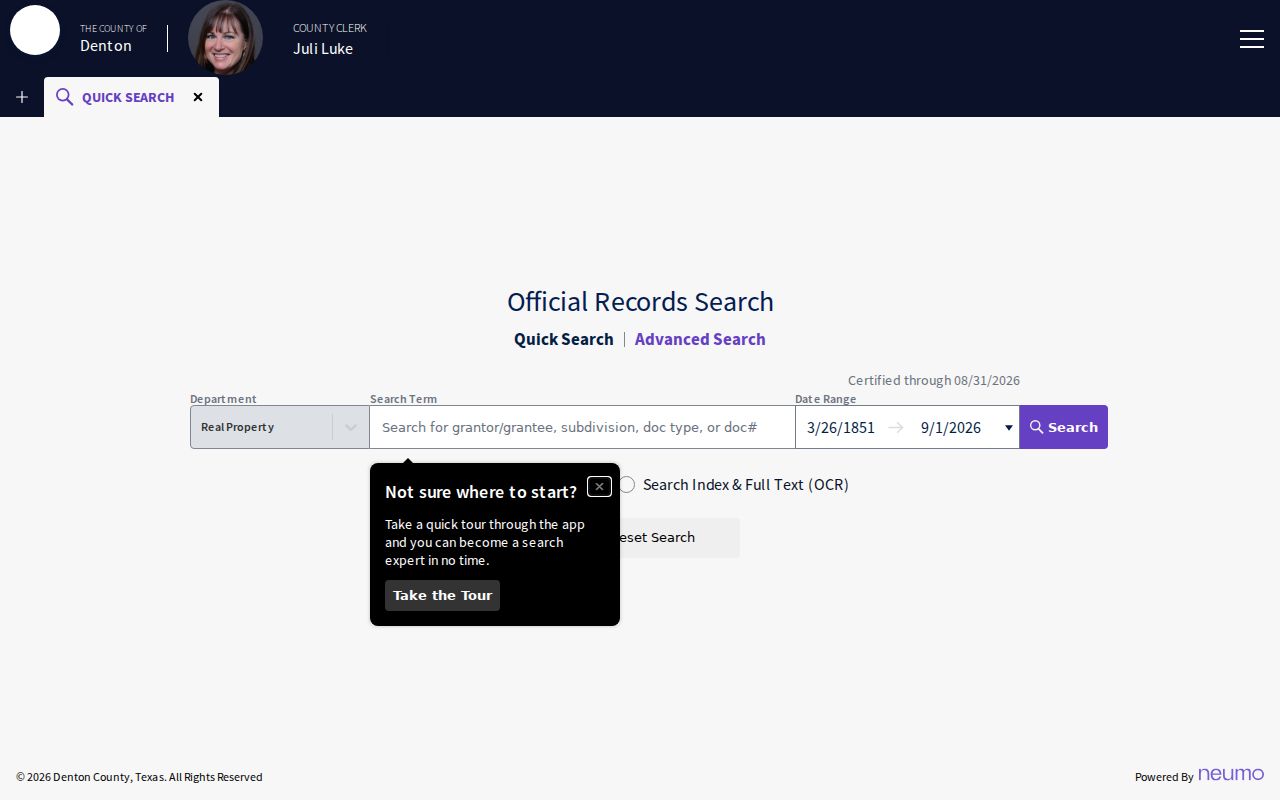
Once an instrument surfaces, preserve the recording date, document number, parties, legal description, and source link. That record lets you check the next deed in sequence.
Denton County GIS Parcel Records
County GIS links an address to the parcel geometry that supports later record checks. The official procedure calls for the Parcels layer. Click a parcel for its X-ref ID. The R number and parcel information come with it. Layer groups cover Parcels, Abstracts, City Limits, ISD, Sales, Address, Owner, and Streets. Voter precinct details appear too. That turns GIS into a bridge. It connects the situs shown in tax data to the legal description a deed search depends on.
A parcel is a mapped unit of land. A situs address is the street address assigned to that property. A legal description uses subdivision, block, lot, abstract, or tract terms. Those terms identify land within recorded documents. GIS data remain approximate. They never amount to a survey or engineering product. DCAD updates or exports parcel geometry weekly. Owner details can lag during annual notice and appraisal-review processing.
- Parcel ID
- A DCAD or GIS property identifier used to join mapped and appraisal records.
- Situs address
- The property’s actual location, separate from an owner’s mailing address.
- Legal description
- The subdivision, lot, block, tract, or abstract wording that can survive a street-number change.
- Criss-cross directory
- A historical directory arranged by address rather than only by name.
A parcel search pays off when context travels with it. Keep the municipality, school district, and special districts on a Denton County map. The map attaches each of them to an address. Boundaries do not follow mail. A Denton County parcel can sit outside the City of Denton entirely. A postal label never overrides a county or city line.
Current Denton County Residents Directory Sources
No single source answers every question in a Denton County residents directory search. Tax and appraisal records carry the strongest property and owner context. The recorded-property index documents deed and lien parties. Voter material splits into public and confidential fields under Texas law. Court, custody, license, and business systems remain separate records. Each has its own custodian, access path, and meaning. A careful Denton residents directory comparison keeps those labels visible. Blend them into one profile and the result stops being trustworthy.
| Current source | What it can support | Custodian or route | Key limit |
|---|---|---|---|
| TaxWeb and DCAD | Parcel, tax-owner, mailing, and situs context | County Tax Assessor-Collector and DCAD | Owner is not automatically an occupant |
| Recorded-property index | Deed, plat, lien, and release parties | County Clerk | A document party may not live there |
| Voter records | Public voter categories under state rules | SOS and county election channels | Protected addresses and identifiers stay confidential |
| Courts and custody | Case or operational record leads | Correct court, Sheriff, jail, or state agency | Coverage and access differ by custodian |
| Library collections | Historical names, addresses, notices, and directories | Emily Fowler and County history collections | Historical entry is not a current claim |
Verifying one documented person takes a narrow path. Start with a dated address. Then move to the relevant custodian record, and compare independent records for agreement. That focused task suits a Denton resident lookup better than a broad street sweep.
Note: Record the source date whenever a live portal, tax value, address, or account status serves as evidence.
Denton County Voter Records Boundaries
Texas voter guidance draws a firm line between public and confidential information. Public categories include name, date of birth, VUID, and the elections a voter voted in. A Social Security number stays confidential, as do Texas driver-license and DPS identifiers. A residence address may also be protected or suppressed for voters who qualify. The Texas My Voter Portal is the official entry point. Its current form labels and result fields should be used directly. Never guess them from memory. They are the authoritative wording for what the state discloses.
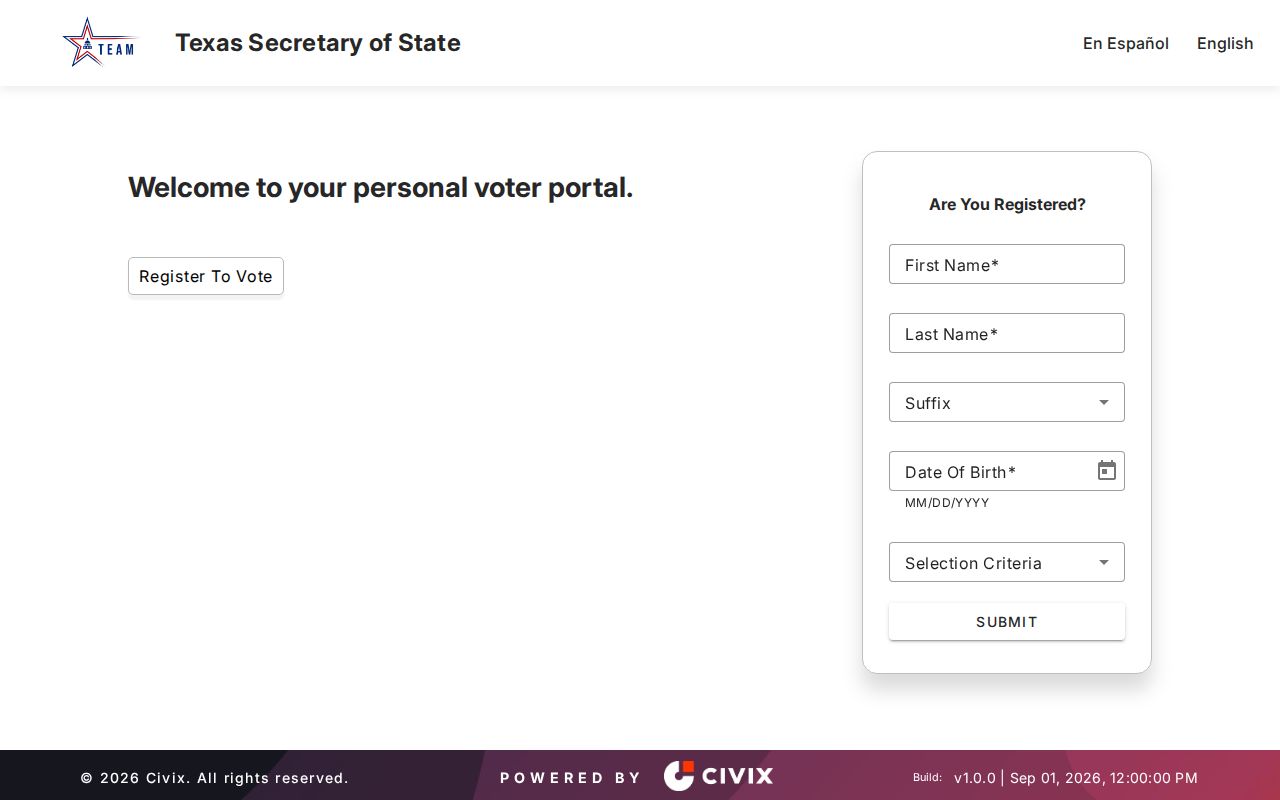
Broader voter-file requests go through the SOS form. That form carries its own delivery, reduction, affidavit, and fee rules. It is never a shortcut around protected residence information or a license to reproduce sensitive fields.
Denton County Historical Directory Shelves
Emily Fowler Central Library holds the historical core of any Denton residents directory project. Its genealogy and Texana collections span city and telephone directories, maps, newspapers, yearbooks, photographs, and local histories. The digitized 1936 Denton city directory is a 142-page Retail Merchants' Association volume. It covers residences, businesses, and advertisements. A 1923 directory entry point also exists through Portal to Texas History. Older finding aids describe the directory runs differently. Treat them as overlapping leads rather than proof that every year survives.
The Emily Fowler Special Collections digital presence and its appointment-limited municipal archive anchor the library side of the work. A printed entry can pack in a lot. It may hold a name, a spouse or household notation, an occupation, an employer, an address, and an owner marker. Read it as a record from that single year. The fuller collection method sits on the Denton city directory page.
Newspapers can pin an event date to an historical address. The library guide lists Denton Record-Chronicle microfilm from 1909 through 2018. A digitization gap from roughly 1981 through 2002 makes microfilm essential for those decades. Citation discipline matters here: keep the collection, reel or item, page, and image URL with every find.
Denton County Residents Directory Source Types
Official records and commercial search categories were built for different jobs. A custodian record names its office and its record type. It usually lists a date or document number too. A commercial category may merge data of unknown age or origin. Genealogy, estate questions, property history, or a personal reconnection all start the same way. Go to the record that created the information. Treat secondary material only as a lead to verify.
| Official record route | Commercial search category |
|---|---|
| Shows a named custodian, record type, date, and access rule | May combine data without a clear source date or document trail |
| Lets a reader inspect a parcel, instrument, filing, or archival item | Can supply a lead, but a result needs independent checking |
| Has known redaction, confidentiality, and request boundaries | May not show which information was omitted, delayed, or outdated |
A current Denton residents directory result earns trust by keeping its source label intact. A mailing address, a historical directory entry, and a document party each mean something different. Any of them can be converted into an unqualified claim about a current resident. That is how errors spread.
Note: Source labels and access dates stay attached. They let a result be revisited after a live record changes.
Denton County Custody Records and Licenses
Several state and local systems can corroborate a specific record role. Yet none works as a general resident roll. Denton Police JailView shows operational labels. These include booking date and time, charges, detainers, bond amount, detainer amount, and total amount. County jail, city jail, court, DPS, and TDCJ records each cover different ground. Read any record alongside its status and date. A name-only similarity should never harden into a conclusion about identity or disposition. The Texas Department of Criminal Justice offender search accepts a name, SID number, current TDCJ number, or a previous TDCJ number. It also permits a partial-name wildcard.
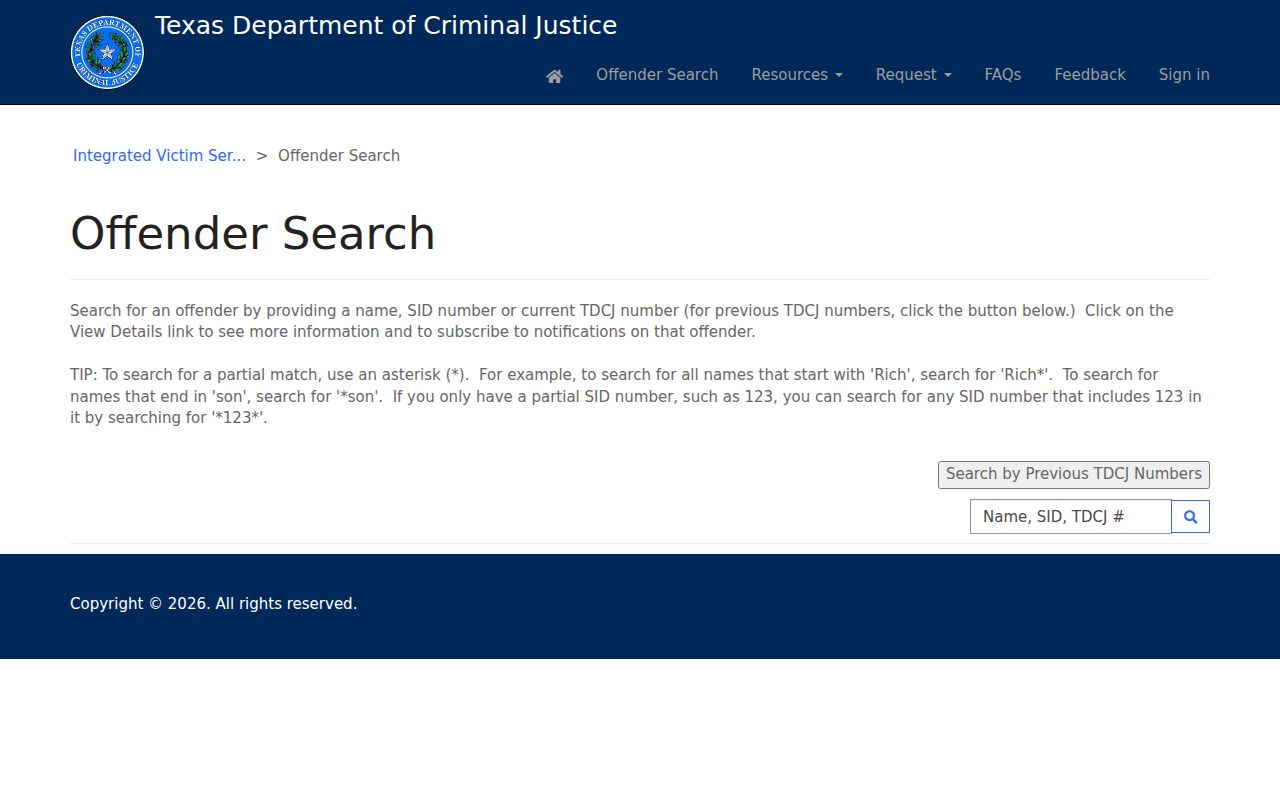
Use each state system only for the record type it maintains. Compare any match against an official court or custody source before relying on it.
Professional and occupational license records offer another limited identity route. The Texas Department of Licensing and Regulation search provides establishment, individual, and school routes, requires a license type, and accepts new or previous numbers.
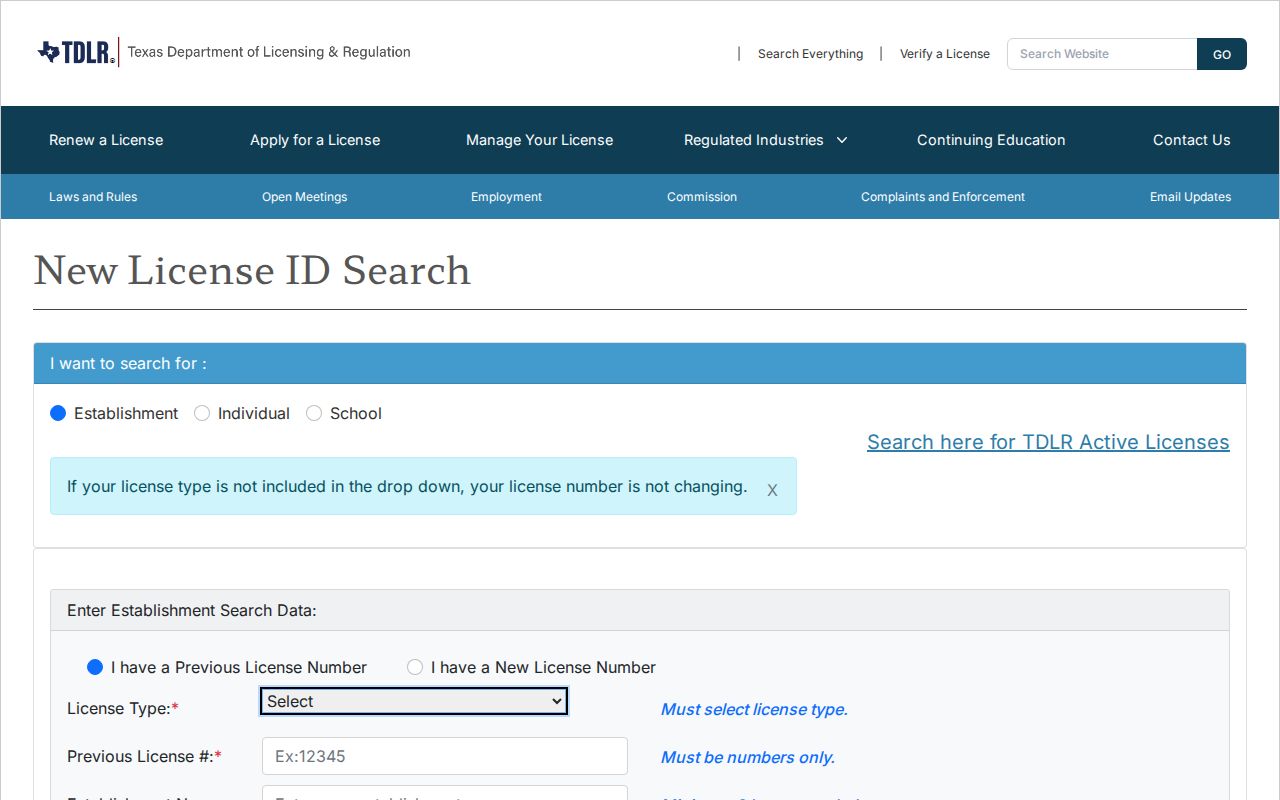
A license result establishes context: license type, expiration, and name. It is not a personal address directory, and treating it as one distorts the record.
Denton County Records Gap
Denton County's paper trail has a hard break in it. The county dates to 1846. Its seat moved to Denton in 1857. Then disaster struck. The first frame courthouse burned in 1875 and destroyed most county records, so an early deed or family document may simply be gone from any residents directory or property rolls search. A missing hit is not proof that no record ever existed. Tax rolls, probate material, newspapers, family papers, library holdings, and state microfilm can all fill the gap left by the fire.
The Denton County history page also places construction of the present courthouse between 1895 and 1897. That timeline frames what survives. It does not replace checking each source yourself.
Note: An absent index hit can reflect fire loss, a spelling variant, an unfilmed volume, a renamed street, or a record held by another custodian.
Denton County Property Record Alerts
The County Clerk's PublicSearch service also offers a Property Alert registration option. It watches indexed real-property activity tied to a selected property or party. That makes it useful after an initial lookup. It also helps when you want to keep an eye on a documented property trail. It is not proof of ownership or occupancy. Delays happen too. Recording and indexing lag can postpone when an item appears.
Use the Denton County Property Alert route only for property or party information you are entitled to monitor. Keep the notice date. Confirm any important instrument against the underlying Clerk record.